

Our ambition - reducing the use of virgin raw materials
Circularity is a key enabler of our transformation towards a Smokeless World. We seek to embed it from the outset, shaping how our products are designed, manufactured, and managed at end-of-life.
Material science is central to this shift, helping us reduce virgin raw material use, cut emissions, and drive sustainable innovation. Our circularity strategy spans the entire product lifecycle, guided by eco-design principles that prioritise durability, low-carbon materials, and end-of-life recovery.
In addition to cigarette butts, we acknowledge the challenges posed by waste from Smokeless products. Yet, with growing consumer and regulatory momentum behind circularity, we also see this as a strategic opportunity to deliver long-term efficiencies, cost savings and educate consumers while managing our environmental impact.
2030 targets
- 50,000t reduction in total product material use1
- 100% of New Category products and packaging launched with eco-design principles2
- 100% Vapour devices to have removable batteries3
- 100% of markets investing in consumer education programmes for the responsible disposal of our New Category products4
How we’ll get there
Our Group Environment Policy commits to applying circular economy principles and using Life Cycle Assessments (LCAs) to guide product design and development.
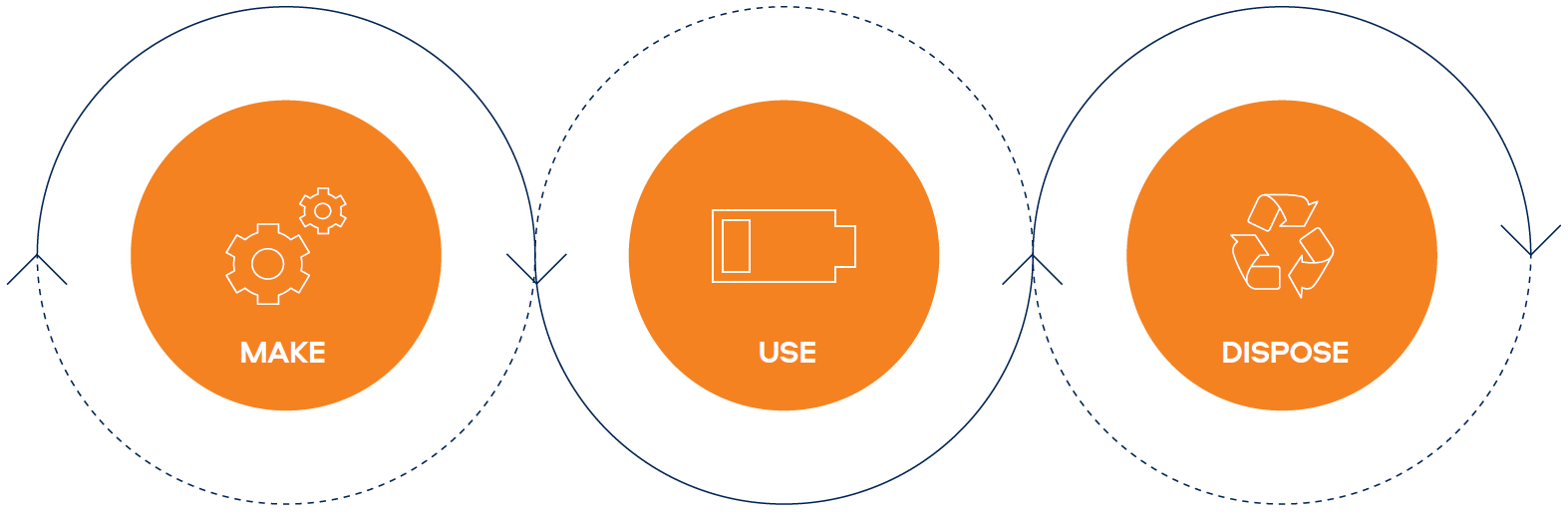
Our current circularity targets for 2025 marked an important phase of our circularity journey. Looking ahead to 2030, we have broadened their scope to cover the full lifecycle of our New Category business, spanning the ‘make’, ‘use’, and ‘dispose’ phases.
Our eco-design principles set clear objectives, and support the reduction of our environmental impacts. We work with suppliers to reduce the impact of existing materials and collaborate with waste management providers to improve infrastructure and support the recovery of critical raw materials.
We also continue to educate consumers on responsible disposal.
Our circularity strategy
Designing our New Category products using eco-design principles
Capabilities
- Eco-design principles
- Sustainable Materials Framework
- Supplier engagement
Enablers
- Green Design Tool‡
- Material procurement
Engaging with our consumersto use and dispose of our products responsibly
Capabilities
- Developing educational consumer content, with incentives where possible
Enablers
- Product websites
- Communication with consumers
Maximising material recoverability and building partnerships
Capabilities
- Take-back schemes and recycling
- Waste management partnerships
Enablers
- Recycling technologies

Notes:
‡ Green Design Tool: The tool is powered by Lifecycle Assessment technology allowing the measurement of a defined set of environmental impact indicators.
1. Excludes materials where regulatory restrictions prevent reduction.
2. Excludes single-use Vapour products. Eco-design principles guide the design and development of products with lower environmental impact, emphasising the use of renewable or recyclable materials, reducing CO2 emissions, and enhancing recyclability, durability, longevity and reusability.
3. Excludes markets where regulatory constraints prevent battery removability.
4. Excludes markets where regulatory constraints prevent implementation.
You might also be interested in

MORE IN:
Sustainability & ESG
Our ambition - reducing the use of virgin raw materials.