


2026 marks the 70th anniversary of the opening of our first Research and Development centre in Southampton.
-
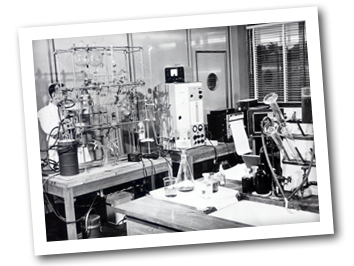
1950s
Research & Development department established to study tobacco products, employing three engineers and five newly recruited scientists in a temporary laboratory.
-
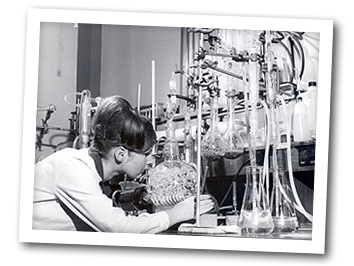
1960s
Chemistry dominates. Scientists start to learn more about the chemistry of cigarettes. Many projects undertaken form the foundation for BAT's research today.
-
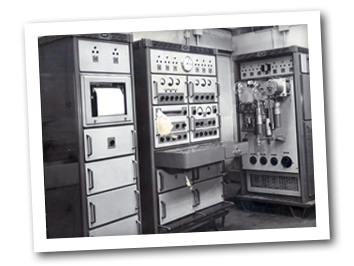
1970s
Greater focus on smoking behaviour and biology. Technology starts to make a bigger contribution. Mass spectrometers are used.
-

1980s
Biotechnology is embraced with full ownership of an earlier joint venture, Advanced Technologies Cambridge.
-
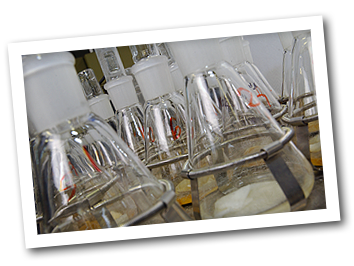
1990s
Analytical capability is expanded and increasingly more sophisticated techniques are used to improve our ability to measure smoke constituents.
-

2000s
British American Tobacco marks 50 years of R&D.
bat-science.com is launched to showcase the company's science.
-

2010s
Embarked on a new era of R&D, shifting our focus to Smokeless categories for Vapour, Heated Products and Oral Nicotine Pouches.
Launched our first Vapour product in 2013, with our first Heated Product launching in 2016 and Modern Oral nicotine pouches following in 2018..
-

2020s
Our Global R&D community continues to grow around the world, with over 1,700 experts across multiple scientific and technical disciplines, dedicated to developing next-generation Smokeless products.





We are in our eighth decade of research and development having established R&D sites in the U.S. and UK in the 1950s. Back then, when BAT principally sold cigarettes, the focus was predominantly on the chemical and toxicological evaluation of cigarette smoke. With the advent of improved analytical techniques, novel spectroscopic methods enabled the accurate identification of individual compounds in cigarette smoke, even those present at very low (micro-or nano-gram) levels.
Biology advanced with the creation of novel laboratory methodologies that could assess the toxicological impact of cigarette smoke while in parallel, biotechnology and specifically molecular biology techniques were applied to mapping the tobacco genome. The first clinical studies were conducted in the 1980s and 1990s to assess the pharmacokinetics and pharmacodynamics of novel tobacco products and with the advent of novel Tobacco Heating products, more sophisticated clinical studies were conducted to enable the measurement of Biomarkers of Exposure.
You might also be interested in

MORE IN: