

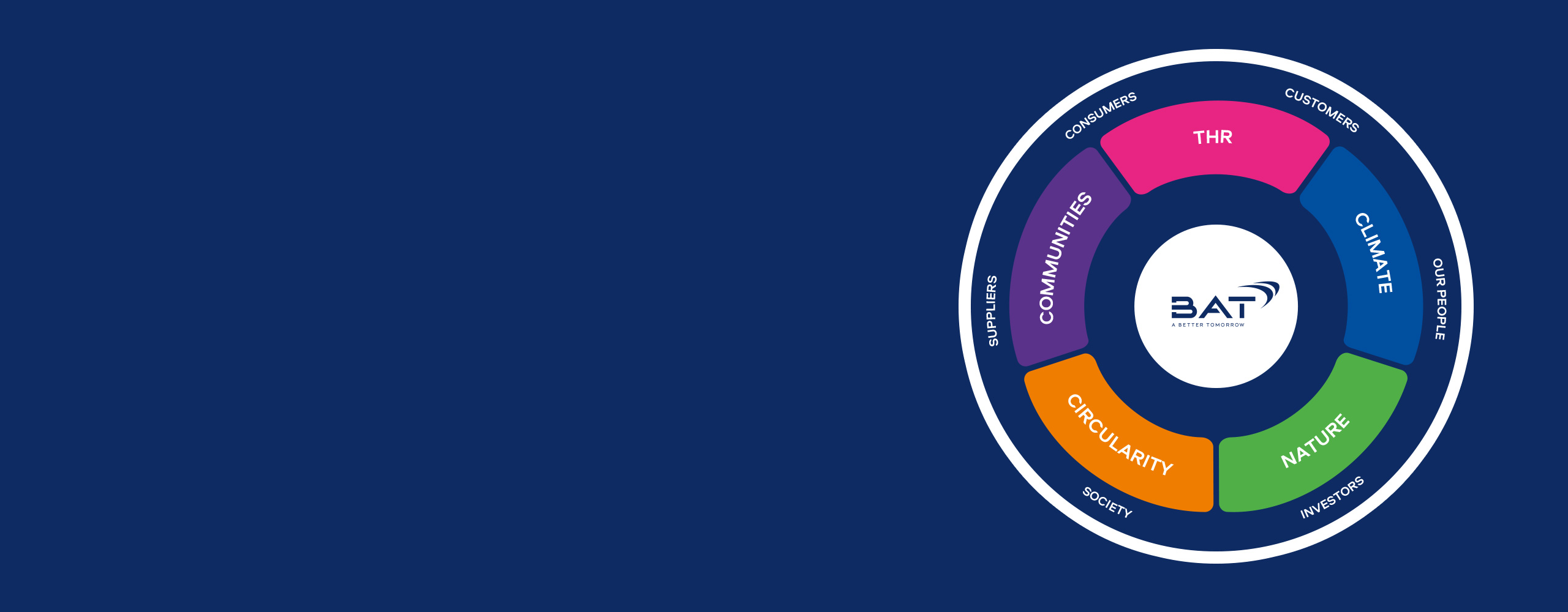
We seek to take a leading role in tackling the biggest global issues in sustainability.
We aim to do this by responsibly Building a Smokeless World, reducing our use of natural resources and delivering our climate goals as we transition to A Better Tomorrow™. We strive to create a meaningful impact in the communities where we operate and inspire all our people to drive change.
We have refined our Group sustainability strategy
In order to better address our material sustainability topics and continue delivering value to our stakeholders, we have refined our Group sustainability strategy.
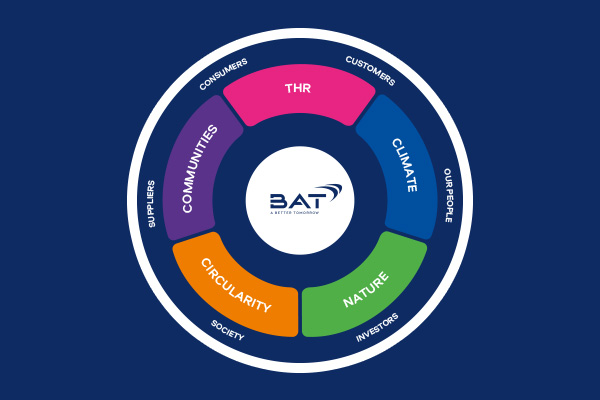
By engaging with a cross-section of stakeholder groups, we have gained a better understanding of our challenges and opportunities, resulting in the identification of the five strategic impact areas, outlined below.
These areas are supported by external reporting, stakeholder engagement and responsible business practices, guiding our future sustainability targets and ambitions.
Our strategy reflects what's important to our employees, consumers, communities, investors, suppliers, and business partners.
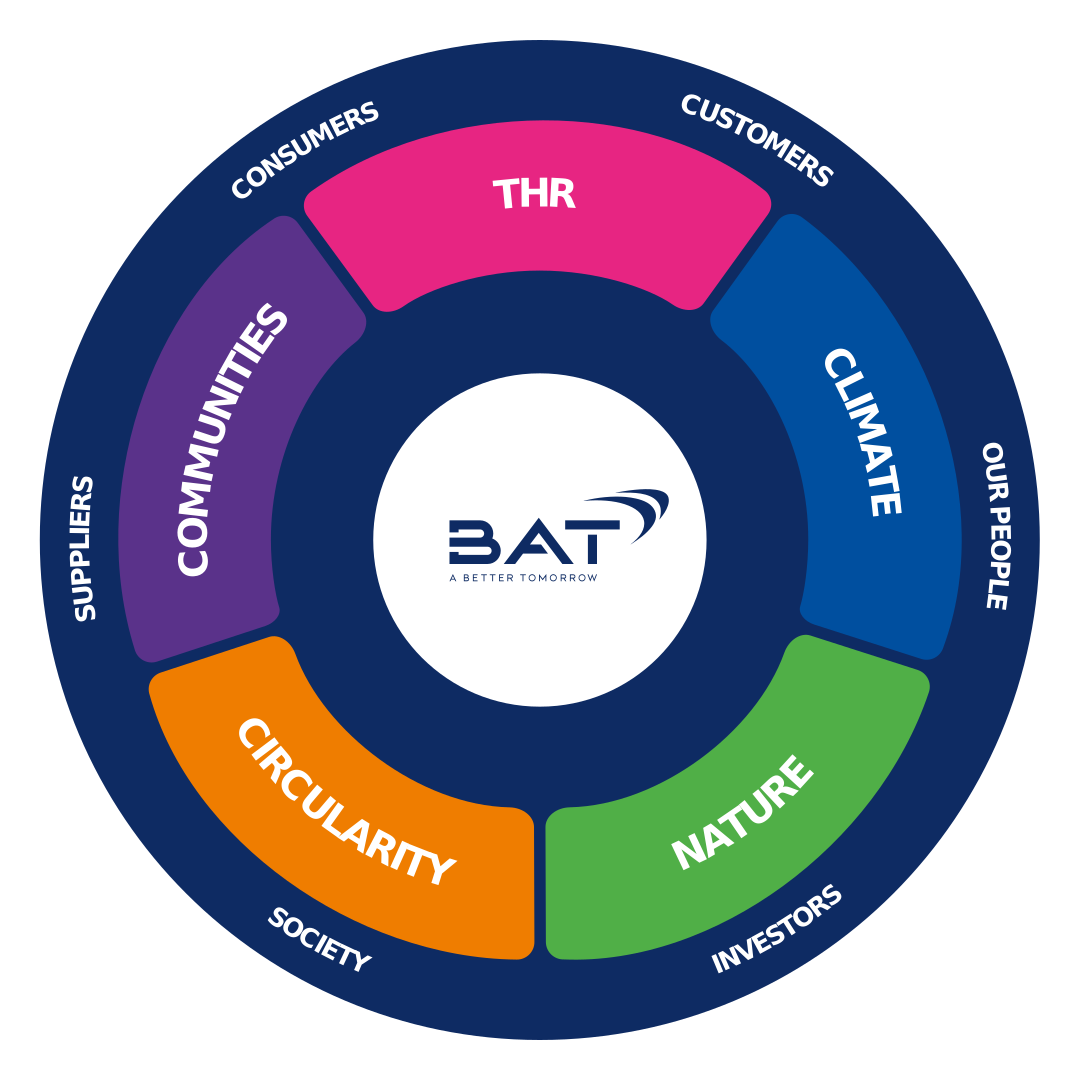
Our Sustainability Strategy focuses on five strategic impact areas:
Over the past decade, we’ve transformed our business and made strong progress toward our goals but building a smokeless world comes with challenges.
We believe evidence‑based regulation and strong enforcement are essential to reducing smoking rates. We work with public‑health authorities and regulators to help shape policies that support Tobacco Harm Reduction while protecting against underage access, environmental impacts, and advocating for high products standards.
Our Group’s climate strategy is guided by our Low Carbon Transition Plan, aligned with the Paris Agreement’s 1.5°C pathway. We’re implementing science‑based targets and building a climate‑resilient supply chain.
Our nature strategy is anchored on the mitigation hierarchy in line with the Science Based Targets Network’s (SBTN) AR3T framework, comprised by four steps: Avoid, Reduce, Restore/ Regenerate and Transform. This means that our commitment to nature goes beyond managing impacts and dependencies as we aim to contribute towards a Nature Positive* future by protecting, restoring, and replenishing ecosystems.
Circularity is a key enabler to our transformation towards a Smokeless World. Our circularity strategy spans the entire product lifecycle, guided by eco-design principles that prioritise durability, low-carbon materials, and end-of-life recovery.
At BAT, our communities are central to sustaining long‑term, responsible growth. From strengthening employee engagement and equity, to supporting farmers through diversification and training, to building capability and stronger standards across our supplier network.
An overview of BAT’s sustainability strategy, outlining our key impact areas as part of BAT’s recently held 2025 Sustainability Summit.
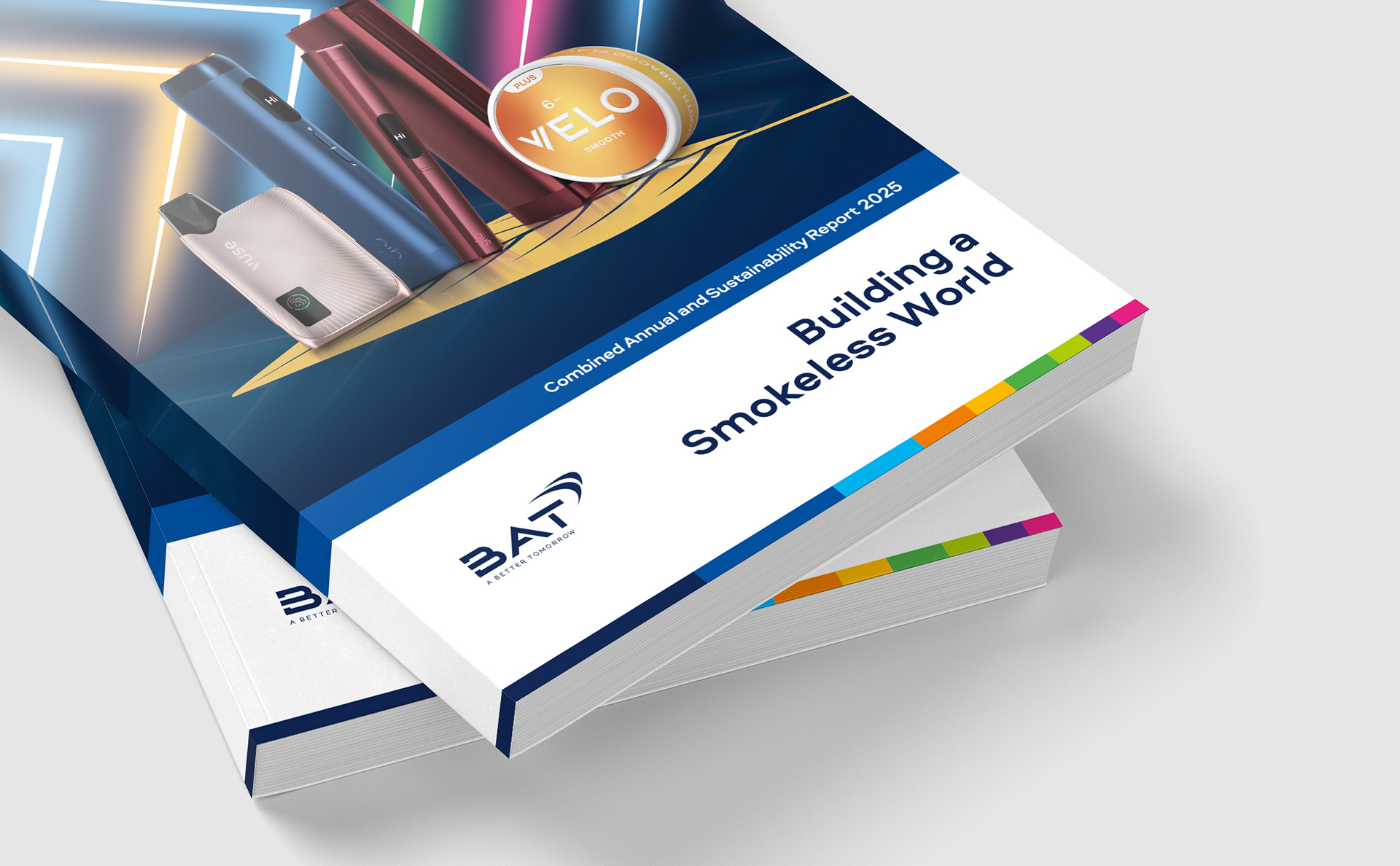
Our 2025 Combined Annual and Sustainability Report provides detailed information about our business strategy, governance, policies, performance and targets.
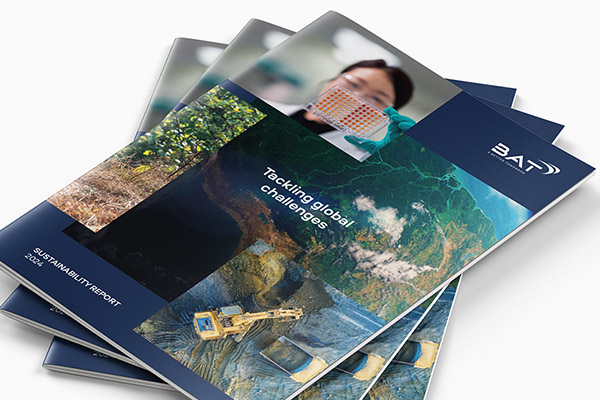
For more information on how we map our sustainability disclosures against leading global frameworks
For more information on our approach visit our sustainability section
Notes:
*According to The Nature Positive Initiative, 'Nature Positive' is a goal which refers to measurable outcomes that contribute to halting and reversing nature loss with significant benefits to society (www.naturepositive.org/about/the-initiative).
**Although financial materiality has been considered in the development of our Double Materiality Assessment (DMA), our DMA and any conclusions in this document as to the materiality or significance of sustainability matters do not imply that all topics discussed therein are financially material to our business taken as a whole, and such topics may not significantly alter the total mix of information available about our securities.
You might also be interested in

MORE IN: